Firefly is now in Haiti! DtM's award-winning phototherapy device will be in use at two Haitian hospitals: Hôpital Universitaire de Mirebalais in Mirebalais, Haiti’s first teaching hospital built by Partners in Health, and...
Design that Matters Presents Pelican at SOLIDWORKS 2015 Launch Event
Elizabeth Johansen Featured on Cover of Harvey Mudd Alumni Magazine
The DtM team is proud to report that Elizabeth Johansen’s alma mater, Harvey Mudd College, featured her work with DtM as part of the cover story for their alumni magazine...
HOW TO: Create a Rubber Prototype Using a 3D Printed Mold
DtM Welcomes Two New Members to Our Board of Directors!
We are excited to announce that David Privitera and Hannah Commoss have joined the DtM Board of Directors. They bring a wealth of industry experience in the design and business fields that will help DtM effectively advance our work in social impact design. Thank you both for joining our team!
ABOUT DAVID PRIVITERA
David Privitera, a founding member of IDEO’s Boston office, has served in a range of roles including designer, project leader, location director and partner. He brings more than 30 years of design experience in business equipment, consumer products, transportation, health care, networking, and telecommunications to the job. His current focus is on building an energized team that applies innovative thought to a broad range of projects.
During his career, David has taken dozens of products to market, handling everything from detailed part design to leading international project teams. He has deep experience working with clients and suppliers in Europe and Asia, particularly Taiwan, Japan, Korea, Hong Kong, Italy, Germany, and England.
Prior to joining IDEO, David spent 12 years at Wang Laboratories, where he served as a principal mechanical engineer for various product development groups. He has a mechanical engineering degree from Worcester Polytechnic Institute. He holds several U.S. patents and various forms of industry recognition and publications.
In his free time, David collects, restores, and rides motorcycles.
ABOUT HANNAH COMMOSS
Hannah is responsible for building and managing marketable securities portfolios. She has 15 years of institutional investment management and financial analysis experience. Prior to joining Spruceview Capital Partners, she was the Deputy CIO, Public Markets and Director of Strategic Initiatives for the Massachusetts Pension Reserve Investment Management (PRIM) Board. She oversaw the public markets investment program, which at the time was approximately $35 billion, and implemented a $4.2 billion direct hedge fund program. Before that, she was at HarbourVest Partners.
Hannah holds a B.A. in Economics from Northeastern University and an M.B.A. from Suffolk University. She is on the Advisory Board of The Greater Boston Food Bank and co-chairs their Kitchen Cabinet, she is a sustaining member and past president of the Junior League of Boston, a member of The Vincent Club, and a wish granter for the Make-A-Wish Foundation.
DtM Gains Three Key Insights for the Pelican Project at Brigham & Women’s Hospital
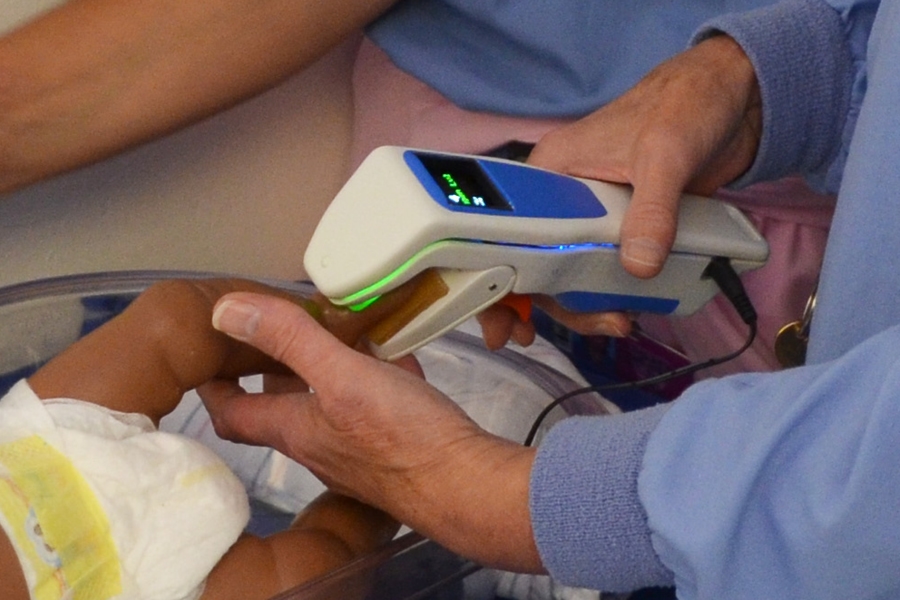
A day at the NICU of Brigham and Women's Hospital. DtM Director of Product Development, Elizabeth Johansen, asks Dr. Steve Ringer and Respiratory Therapist Janet Rowell to try Pelican.
Yesterday was a great day for Design that Matter’s Pelican Pulse Oximeter project. Dr. Steven Ringer arranged for us to interview dozens of healthcare providers during an all-day visit at the Neonatal Intensive Care Unit of Brigham and Women’s hospital. During the day, we learned three very interesting things:
- moving parts and cables are the first to fail
- make it easy to wipe down
- a respiratory rate timer could be a great addition
Respiratory Therapist David Beadles tells DtM about common equipment failures at Brigham and Women’s Hospital.
Our host for the day was Respiratory Therapist David Beadles. We spoke about one of the inspirations for our project: the adult fingertip pulse oximeters you can buy over-the-counter at CVS. He mentioned, “Springs are always the first thing to fail on those probes. Whenever you have moving parts, you have failure.” Then he took us to see a $2500 sensor cable from a transcutaneous newborn monitor that had worn out and frayed over time. How might we create a device that is portable, but won’t get lost or stolen, without using cables to tie it onto something?
Nurse Karen Riedel tries wiping down the student prototype, and then the shoe prototype.
We asked Nurse Karen Riedel how she would clean a pulse oximeter between uses. She promptly grabbed the nearby jar of cleaning wipes, put on her latex gloves, and wiped down each prototype. Overall the process went smoothly for all of the prototypes. In the process, Karen noted some difficult-to-clean crevasses on the student prototype near the sensor. Opening the shoe prototype, Karen said, “Oooh magnets! If it comes apart it is much easier to clean. A hard material is best for wiping down.” However, would the top and bottom of the shoe get separated and lost?
Respiratory Therapists Janet Rowell and Jill Robinson try the student prototype and dream about adding a timer to help them count newborn breath rate.
One of the biggest surprises of the day was learning how respiratory therapists at Brigham and Women's diagnose pneumonia. In addition to measuring oxygen level in the blood, therapists must measure how many breaths the newborn takes per minute. Respiratory Therapists Jill Robinson and Janet Rowell said the standard for measuring breath rate, even at this world-class hospital, is to look at the clock on the wall, then look at the newborn’s chest, and hope you look up at the clock again after 15-20 seconds, then multiply your reading to get breaths per minute.
Janet said, “Adding a stopwatch to your pulse oximeter would be great to help us count respiratory rate. Then you wouldn’t have to look away to see the clock on the wall.” Jill asked, “Could you add a function that keeps giving me a 15 second countdown over and over so I can count respiratory rate at any time? That would be very helpful for us!” If we add a timer to the device, it could better serve developing countries who follow the World Health Organization IMCI protocol which specifies counting breath rate. It was amazing to discover that the staff at the most resource-rich hospital could also benefit from a timer to help them count breath rates when diagnosing pneumonia and respiratory distress.
All in all it was a great day that gave us a great deal of new information and insights. We look forward to returning to the DtM studio to create a new round of prototypes to test next!
Click here to learn more about DtM's work with Brigham and Women's Hospital.
Using our MakerBot 3D Printer to Create a Mountain of Pelican Prototypes
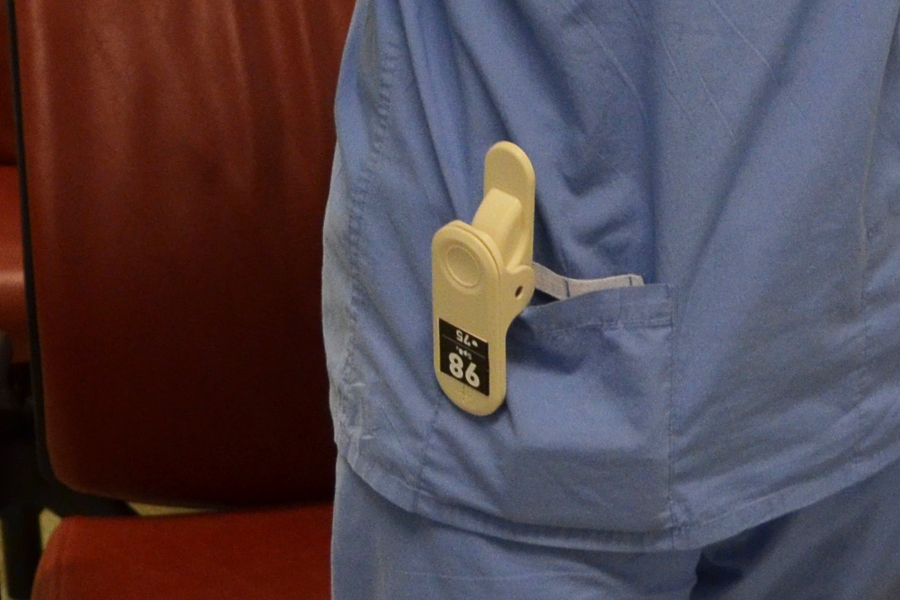
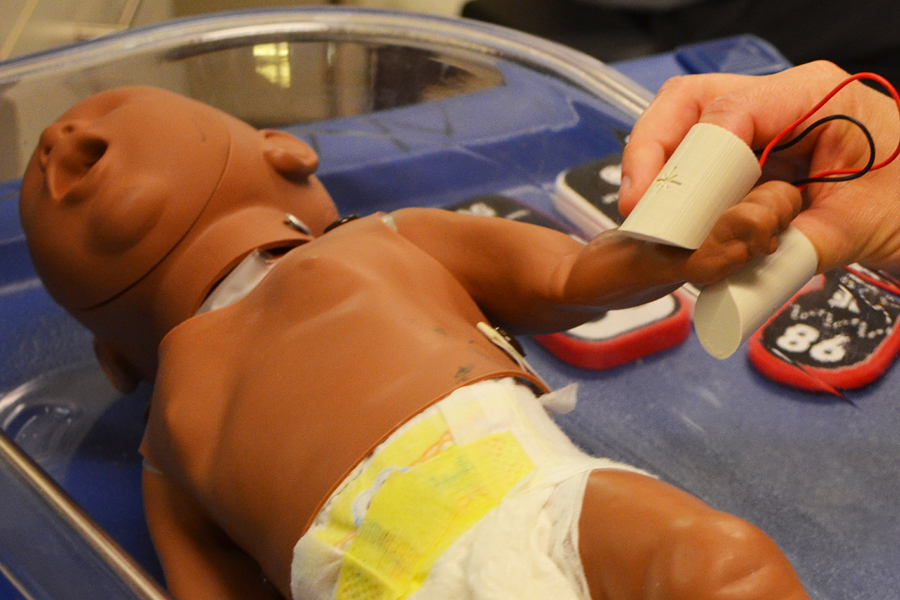
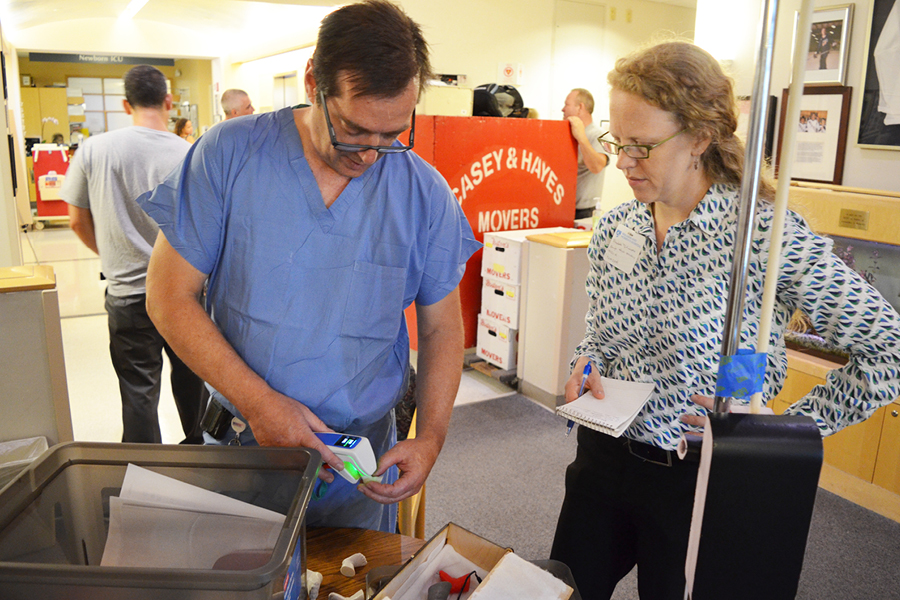
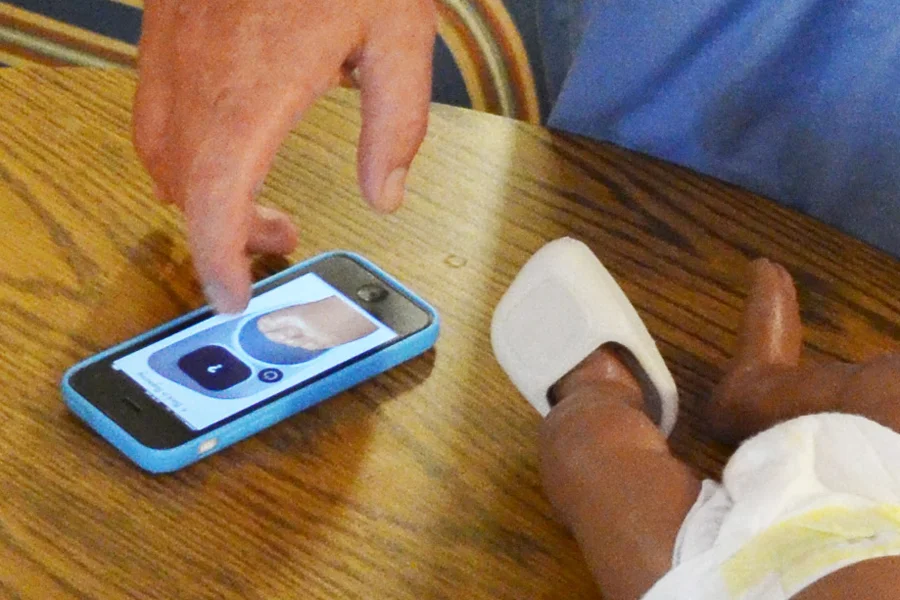
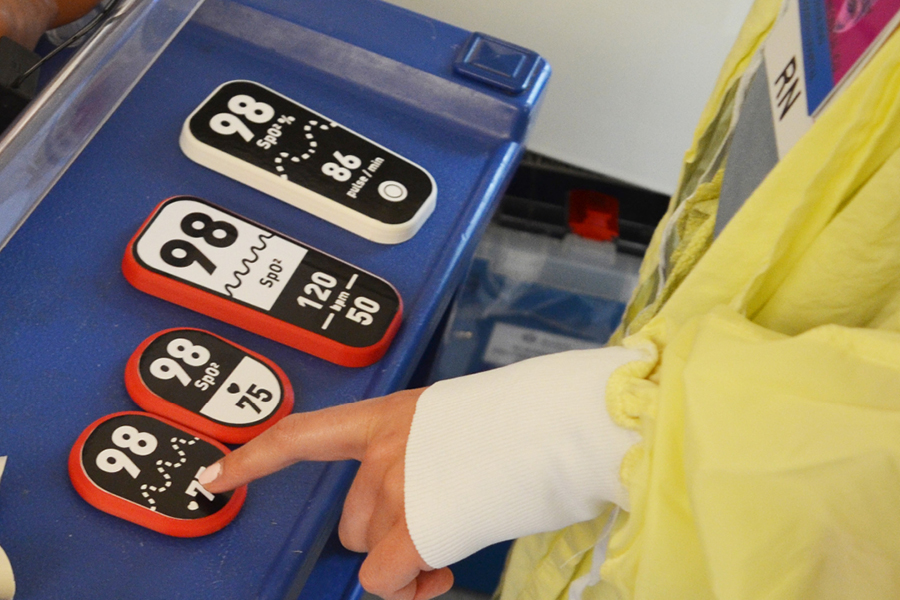
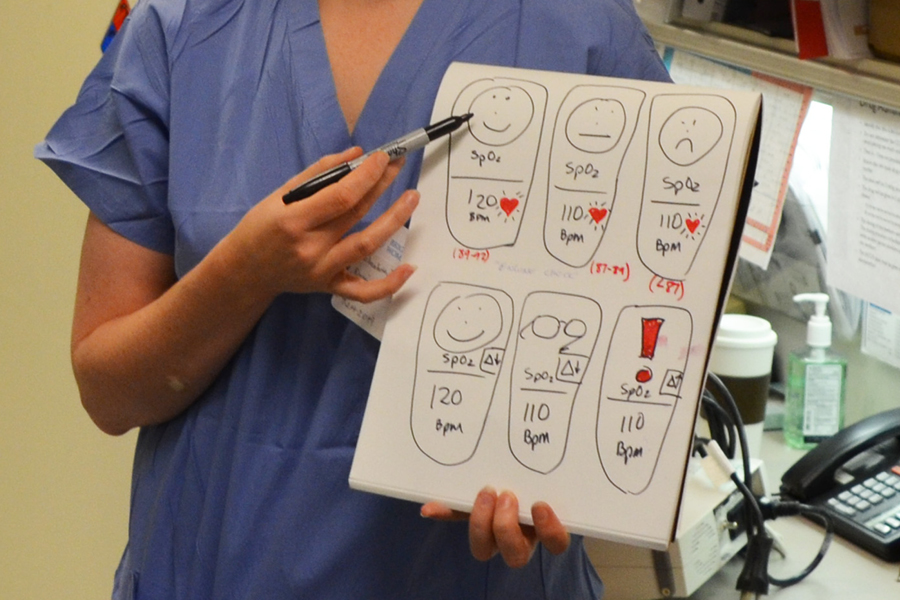
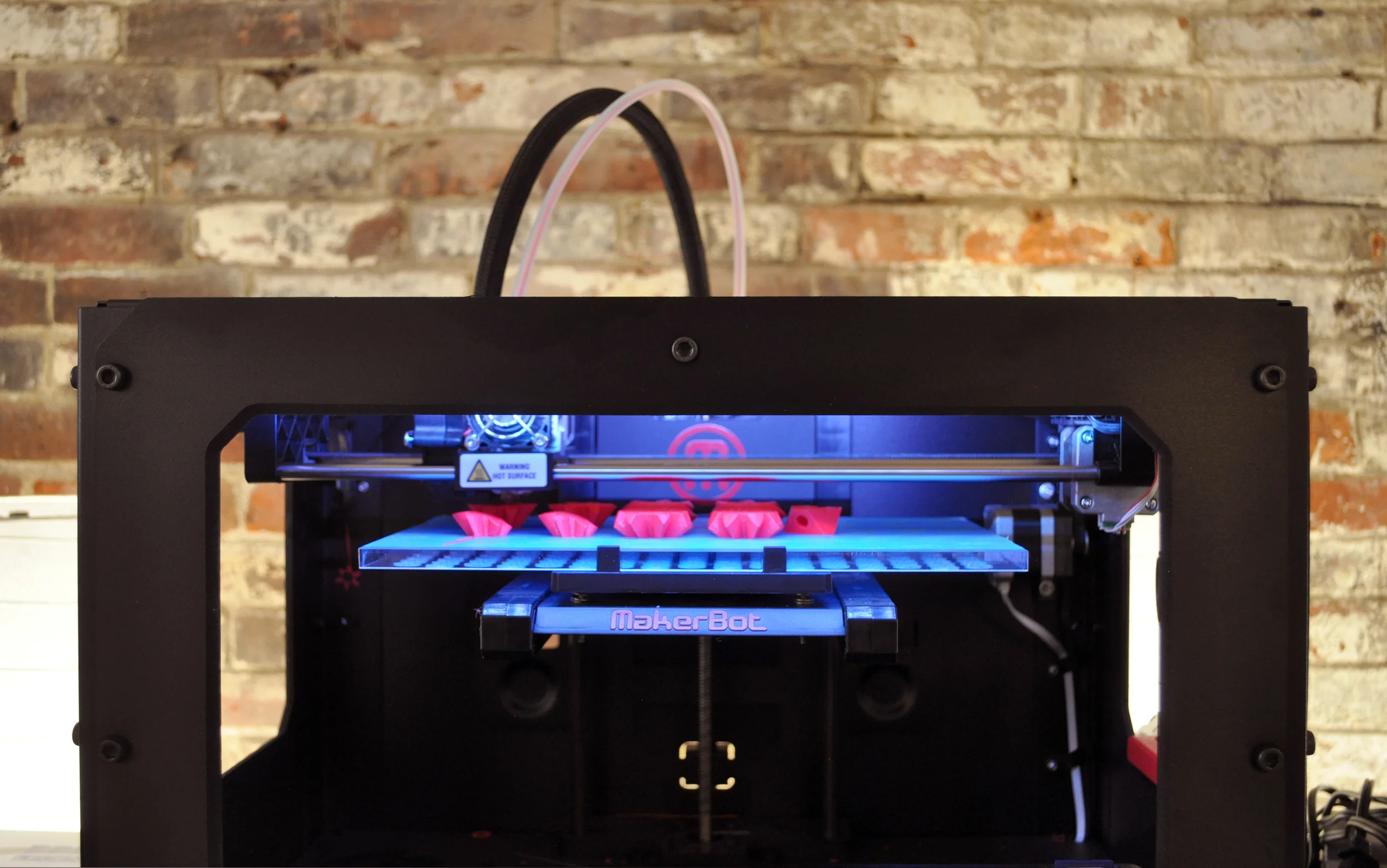
If a picture is worth a 1000 words, then a prototype is worth 1000 pictures. In order to get great feedback, it’s incredibly helpful to have prototypes. Comparisons are also beneficial, so we make many prototypes early in the design process.
During the spring, a fabulous team from the MIT and Rhode Island School of Design Product Design and Development Class created our best Pelican prototype yet. Over the last week, Design that Matters Designer Will Harris whipped up a series of additional prototypes using our 3D printer. Amber Gaumnitz of Partners in Health visited our offices Friday to describe pain points around procuring pulse oximeters for Haiti and Rwanda. Upon seeing the Makerbot 3D printer fabricating the new prototypes, Amber exclaimed, “It’s like magic!!”
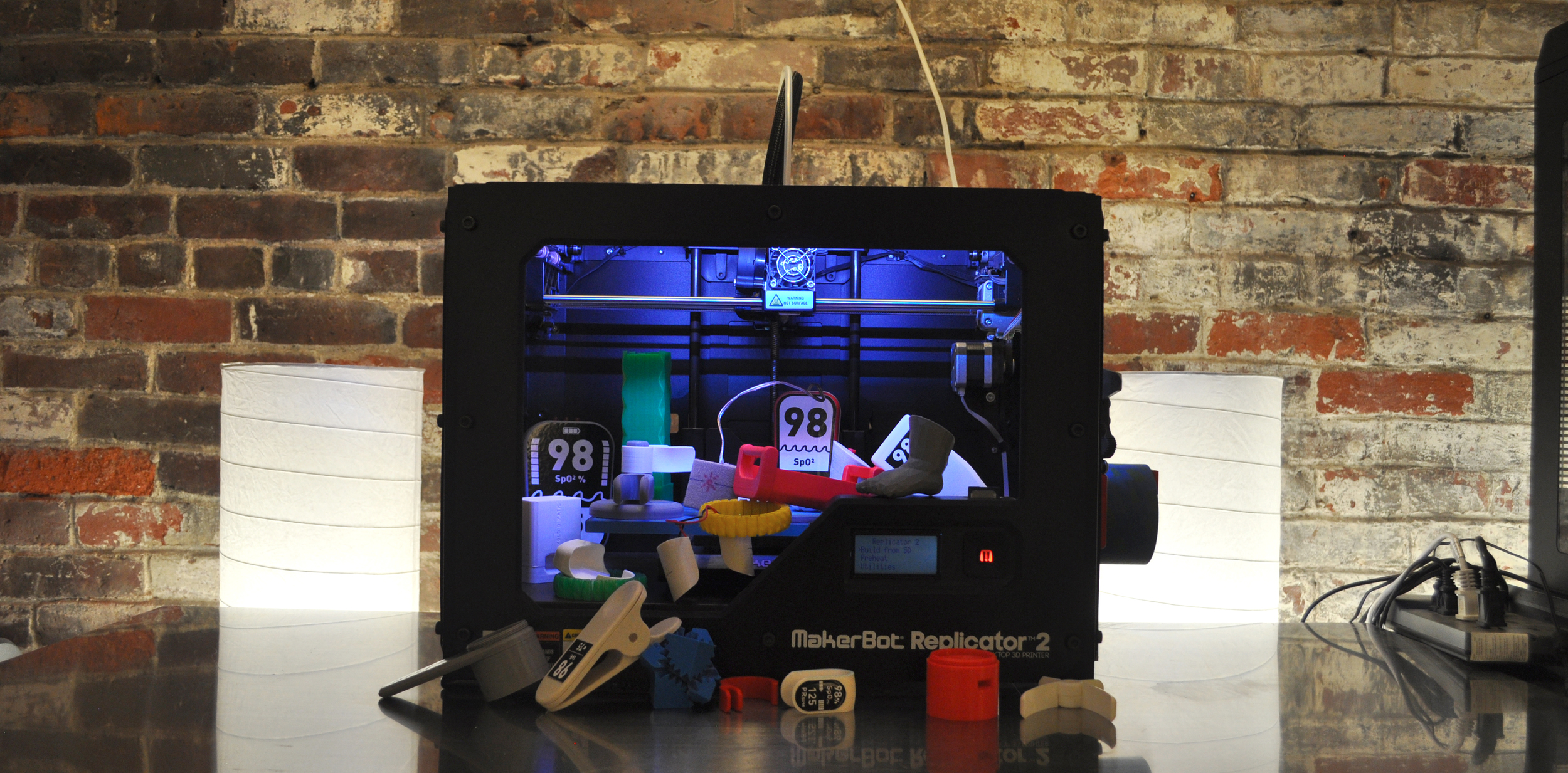
DtM's Makerbot 3D Printer and the pile of prototoypes we've created with it so far.
Meanwhile, Elizabeth created DtM's first live interaction app allowing users to interact with a button and display for our shoe prototype. Click on the image to interact with our prototype!

Click on the image to interact with our prototype!
These prototypes fired the imaginations of dozens of healthcare providers at the Brigham and Women’s Neonatal Intensive Care Unit. Using the prototypes, we received vital feedback about basic ergonomics, and display preferences. Prototypes are even more vital when we perform research in locations with a different culture and language. They take abstract ideas about what could be, and quickly make them tangible to enable us to move beyond words and see how people actually would or wouldn’t use them.
Click here to learn more about DtM's work with Brigham and Women's Hospital.
Prepping Pelican for a Day at Brigham and Women’s Hospital
We just came back from an amazing full day of Pelican pulse oximeter research at the Neonatal Intensive Care Unit (NICU) at Brigham and Women’s Hospital, hosted by Design that Matters board member Dr. Steve Ringer. Brigham and Women’s NICU is one of the best in the world, so it’s a great place to observe how to diagnose and treat newborn pneumonia under the best of conditions. If medical devices fail to meet the needs in this resource-rich environment, they will certainly fail when they are transferred abroad where staff don’t have as much training, power fluctuates, and replacement parts are not locally available.
We learn the most when we can see a variety of healthcare providers in the setting where they provide care. Before any meeting, we create a research protocol, including goals for the day and observations to make, questions to ask, and activities we would like to do. We discussed the goals for the visit with Dr. Ringer, as well as rules around interacting with staff, patients, and taking photos. Dr. Ringer then reached out to a variety of people in the NICU and arranged for Respiratory Therapist David Beadles to host us for the day.
Left: Our research protocol and camera are ready to go. Right: Will Harris pushes our borrowed cart to display prototypes throughout the NICU at Brigham and Women’s Hospital.
We started the day by peppering David with questions, which in turn enabled him to learn what kind of information could be most valuable to design the Pelican pulse oximeter. Using his knowledge of the Brigham NICU culture, David had us don scrubs, he grabbed an empty cart for our prototypes and introduced us to nurses in each bay, paving the way for us to reach out dynamically to all the healthcare providers for the rest of the day! The Brigham and Women’s staff went above and beyond to make us part of the team.
Nurse Briana Donnelly tries out the Pelican student prototype and then draws her desired display.
Before arriving, we generated additional materials like flashcards to compare device features, and prototypes to simulate use. Tangible materials help us spark conversation about latent needs that are hard for people to express. We even had healthcare providers draw their desired device display to better understand how to meet the needs.
Over the last decade, we have visited the NICU at Brigham and Women’s many times under the supervision of Dr. Ringer. At the end of the day, he remarked “People really enjoy when you come to visit. They find it very stimulating. It’s a rare opportunity for them to express what they want and need in order to provide great newborn care.”
Click here to learn more about DtM's work with Brigham and Women's Hospital.
DtM in the News: Firefly Featured on PBS NewsHour
Firefly was recently featured on PBS Newshour in an excellent piece about EMW’s Breath of Life program to save newborn lives. The piece outlined the amazing work that the East Meets West Foundation and MTTS have done in Vietnam. Before 2000, the mortality rate of the neonatal intensive care unit was fifteen percent. Last year it was less than two percent. Dr. Ngoc Diep Pham explained, “In Vietnam, the mortality rate has come down by two-thirds since 2009. Life for doctors and patients is far better.” Thanks to the East Meets West Foundation and MTTS for discussing our partnership as part of this great feature!
DtM Kicks off CPAP Design Workshops
Today, Design that Matters kicked off a series of design workshops and product implementation coaching with Dr. Ryan Carroll to design an innovative Continuous Positive Airway Pressure (CPAP) device to save babies from respiratory distress and pneumonia. Pneumonia is the leading cause of death in children under five worldwide - more than AIDS, Malaria, or TB. The goal of our collaboration is to expose the CPAP team to design thinking methods and help the team construct strategies for implementing CPAP to have massive impact for the poor in LMICs.

In our first work session together, we were joined by Smitha Gudapakkam from the MGH Center for Global Health. We covered a lot of ground, including forming a point of view about the need, users, and context for the project; creating an hypothesis for how the program will reach massive impact; prioritizing critical assumptions for the project to reach impact; and then brainstorming over 50 ideas for how how the CPAP could be supplied to hospitals. Throughout the workshop, we used quick sketching techniques to make ideas easier to understand and more memorable.

In one exercise, we drew slider bars to better depict tensions inherent in the project. One of the central tensions is between making a device that is extremely easy-to-use right out of the box, versus an assembly of off-the-shelf parts that can be more easily repaired. In the United States, CPAP is one of the few devices that is often assembled by healthcare professionals from off-the-shelf parts, even at the highest level hospitals. Ryan noted that having local technicians and healthcare providers build the devices themselves becomes a critical milestone in their training, building confidence to treat babies.
The workshop was just in time for Ryan to return to Uganda and put these new methods and ideas to work. We look forward to hearing back from Uganda and to taking design thinking even further in our next workshop this Fall!

About the CAMTech CPAP
The CPAP is the center of a novel education program to enable hospitals to diagnose and effectively treat respiratory distress, while building capacity to repair their own CPAP devices locally. The project received the MGH Center for Global Health CAMTech Innovation Award in 2013. Dr. Ryan Carroll is currently co-creating the training program and device with team members from the Mbarara University of Science and Technology and Mbarara Regional Referral Hospital in Uganda.
My Time at Design That Matters

After an eventful six months David Solomon, our Interaction Intern, headed back to Northeastern to continue his studies. Before he left David wrote a brief post reflecting on his time at DtM. We are sad to see him go but we look forward to keeping tabs on the awesome work we know he'll produce in his future career.
What is Design that Matters? What do they do? What would I do during my internship at DtM if I got the position? These were all questions I asked myself when I received an email newsletter about a spring and summer internship at Design that Matters. Most of these questions were answered during my interview but certain aspects of a job can not be explained in words. They have to be experienced. An internship is meant to benefit both the employer and employee; we learn and grow from each other in ways we can't imagine.
So, Design that Matters is a design studio that specializes in innovation for social enterprise. DtM redesigns products that work great in developed countries, making them operate just as well or better in developing countries. I was hired as an interactive design intern. My main role was to develop new interactions for current projects. These are what the team call "works-like" prototypes. These prototypes are not the real device, but they operate in a way that, without any explanation, a user can quickly understand what the device does and how it will work. The challenge for me was to make sure that, every time a prototype was turned on, the user had an experience that not only wowed them but also encouraged them to provide feedback and identify different ways the device could be used to help save lives worldwide.

During my internship I learned a lot more than just how to make awesome prototypes and work on projects. I also learned about social enterprise, running a non-profit, product development, impact labs, and fundraising.
A few projects that I worked on during my time at DtM were Firefly Internet of Things (IoT) and Project Pelican. I used my prior knowledge of Arduino, a small programmable board that can sense and interact with objects in the physical world, and electronics. With these skills, I was able to integrate small interactions into early prototypes of Project Pelican. These included programming a light sensor and an LED to turn on and print to a display screen the current heart rate and blood oxygen level. Later on, as the project moved forward, I helped with more advanced programming. I contributed to the RISD and MIT student team’s work, adding to their code so the prototype would turn on when placed on a baby’s foot and turn off when it was removed from the foot.
The Firefly Internet of Things (IoT) project was new to DtM and to me. I was familiar with the concept of "Internet of Things" and connected devices, but I had never worked on a project that incorporates this concept. I started my work on the project not knowing what I was going to do or how I was going to accomplish it. I started by trying to connect a mini 3D-printed version of the Firefly phototherapy device to the internet using an Electric Imp. Using the Imp, an Arduino board, and a sensor, I could capture information -- such as the time and temperature of the room where the device was situated -- and send an email or text message containing that information to a user. For the next iteration of Firefly IoT, I added a SMS shield to the Arduino board. This enabled the device to send data anywhere that has cell service. To advance this project, DtM participated in a Hack-a-thon hosted by MIT H@cking Medicine, the Kauffman Foundation, and CAMTech. There, they formed a team called Datawings. The team and I were able to integrate my current prototype and capabilities with a website they designed to provide users with a visual representation of the data being collected from the mini Firefly device. Now, anytime we turned on the Firefly device, it would send the team current data, such as the temperature of the room, voltage, pressure, and total time the device had been in use.
- David Solomon, DtM Interaction Intern, 10 June 2014
We wish David well on his future endeavors and hope he'll visit us at the studio again soon. Thanks for all your help, David. We couldn't have made such great progress without you!
DtM Welcomes John Gould to Our Board of Advisors
John has an MBA from Babson College and over 30 years of successful experience in the management of high technology businesses. He served as VP Sales & Marketing for a high technology start-up that went public during his tenure and was owner and president of an international software distribution company.
John established The Gould Family Foundation to support humanitarian organizations that serve the poor in the developing world. John is Director of the foundation. The Foundation supports the international mission work of the Sisters of Notre Dame de Namur including building a school, upgrading hospitals and clinics in the Congo and establishing Small Family Farm programs in Peru and the Congo. It also supports the work of IMEC, a humanitarian organization that upgrades hospitals and clinics and equips small family farms and schools in the developing world.
John serves on the Board of IMEC. He founded and is involved in the management of the Youth Mountain Adventure Program, which serves underprivileged, urban youth, with the Appalachian Mountain Club.
DtM Indiegogo Closes with 130 Contributors & 228% its Goal!

We did it! We reached over 228% of our funding goal, thanks to 130 contributors from the United States, Canada, Europe, Australia, and Kenya. Over 39 days, 4249 people visited the Pelican campaign from 35 countries, spreading awareness about childhood pneumonia across the globe. Your help will allow us to push forward with the development of the Pelican Pulse Oximeter. We'll continue to build awareness of pneumonia as a major global health issue.

Congratulations to Ashley McGregor Dey, winner of our Squawking Pelican Contest! Ashley shared the Pelican campaign through Indiegogo’s social media links, leading to 50 people visiting our campaign. Runners up are Bre DiGiammarino and Kevin Wiesner with 26 and 20 campaign visitors respectively.
Thanks again for all of your help! We couldn't have done it without you. If you or someone you know is still interested in contributing to the campaign, you can make a secure donation to Design that Matters on our website!


Firefly: Certificate of Free Sale

In June, DtM manufacturing partner MTTS received a Certificate of Free Sale (CFS) from the Vietnamese Ministry of Health for Firefly Newborn Phototherapy. Recognized by the ASEAN member nations, this type of medical device regulatory approval clears Firefly for sale in ten countries in the region--a market of 600 million people with over one million babies in need of phototherapy every year. MTTS is now pursuing CE Mark approval which will open access to many more countries around the world including India, a country of 1.2 billion people and over two million babies in need of phototherapy each year.

Dassault Systèmes and SOLIDWORKS have just matched our $10k Indiegogo campaign!

Dassault Systèmes and SOLIDWORKS have just matched our $10k Indiegogo campaign bringing our current total to over $20,000!! Thank you for supporting our Indiegogo campaign and helping Design that Matters fight pneumonia, the leading cause of death in children worldwide.



We are proud to announce the support of our premier platinum sponsor, Dassault Systèmes and SOLIDWORKS. Design that Matters uses SOLIDWORKS® 3D software to design each of our products, from early sketches through final design for manufacture. Check out this 5 min video to see how DtM used SOLIDWORKS to design Firefly phototherapy to treat 500,000 newborns with jaundice in Southeast Asia and Sub-Saharan Africa. This Spring, we have already used SOLIDWORKS to bring early ideas to life for the Pelican project. Funding provided will diagnose 5,000 babies. Thank you so much Dassault Systèmes and SOLIDWORKS!
Firefly Featured at the Museum of Design Atlanta (MODA)

We are happy to announce that Firefly is currently being featured in its first museum! Starting on May 25th, Firefly has been a part of the Museum of Design Atlanta (MODA) show titled, Design for Social Impact. The exhibit runs till August 3rd so if you are in Atlanta, you should try to swing by and see one of the first Beta units that was used in our initial clinical trials. We hope that the exhibit helps to inspire a new generation of great minds willing to use their skills to make the world a better place!
Design that Matters would like to express our sincere thanks to our Firefly project partners the East Meets West Foundation and Vietnamese manufacturer Medical Technology Transfer and Services. Their partnership made Firefly possible.
Additional thanks to Firefly’s lead donors: The Lemelson Foundation, The van Otterloo Family, Bohemian Foundation, an anonymous donor, ANT Italy - Friends of Trento Neonatology, The Autonomous Province of Trento, Italy, and Martin and Debbie Hale.
DtM CEO Presents Global Health Data Service Concept at O’Reilly’s Solid Conference
On May 22, DtM CEO Timothy Prestero spoke on the main stage at the inaugural O’Reilly Solid Conference, created to explore the oncoming convergence of hardware and software. Tim used Firefly phototherapy to illustrate why devices designed for high-income countries don't work and what to do about it. Thanks to DtM intern David Solomon and DtM volunteer Galia Traub, Tim demonstrated communication between a mock-up global health device and an app using mobile networks. DtM’s proof of concept is the beginning of a data service that could dramatically improve global health impact in developing countries.
This novel data service would allow us to track the operational status of medical equipment in developing countries: which devices aren't being used (suggesting a need for more training), and which devices need maintenance. We could use this service to preferentially track those devices that have the greatest potential social impact and represent the greatest environmental impact if they are discarded. This would allow the most efficient application of a country's limited resources for medical device servicing and repair.
DtM intern David Solomon used arduino, a GPRS shield, and an SIM card to create hardware capable of sending data from a medical device’s internal computer to a data management app through mobile phone networks.
DtM volunteer Galia Traub used Herokuapp and to create an app that can receive information from a device, and then format it into meaningful actionable data. Dummy data appears here for the purpose of illustration.
About the O’Reilly Solid Conference
Physical things—machines, devices, components—are about to experience a profound transformation. The Internet fundamentally changed how software is developed and deployed, and now hardware is on the brink of a similar disruption. Industry is realizing that smart, networked machines can bring them the efficiencies and new capabilities to do more, faster and cheaper. Devices from thermostats to jet engines that were once strictly mechanical are now seamless blends of hardware and software—packages of microcontrollers, sensors, and, above all, networked software that can ingest lots of data, understand context, and make intelligent decisions. Hardware and software are fusing into a single fluid entity. This collision of software and hardware is fueling the creation of a software-enhanced, networked physical world.
Anything from an Uber car to a railroad locomotive can be sold as a service, provided that it’s adequately instrumented and dispatched by intelligent software. Good data from the physical world brings about efficient markets, makes cheating difficult, and improves quality of service. And it will revolutionize business models in every industry as service contracts replace straightforward equipment sales. Instead of owning an air conditioner and buying electricity from a utility to run it, a homeowner might let the utility own the air conditioner and just buy a contract to keep her house at 72°, giving the utility an incentive to invest in more efficient equipment, while creating economies of scale.
Our guiding principle is to give our audience a visceral feel for this world of combined hardware and software. We're going for something that feels less like a conference, and more like a miniature World's Fair Exposition with talks.


Tim’s talk at Solid is part of DtM's series sharing lessons learned from the design and launch of Firefly phototherapy. This series is made possible with support from The Lemelson Foundation in celebration of 20 years of improving lives through invention.
Holy Smokes! DtM Pelican Indiegogo Passes 100 Funders!


In just 4 days we have gone from 66 supporters to over 100! This is totally unexpected and incredibly exciting news! We can't express the importance of this outpouring of Pelican support as we begin to scale the project. Help us build the campaign further as we continue to raise awareness for newborn pneumonia, the number one killer of children under five.
Your show of support means more attention and resources to solve this serious problem and bring us closer to a world of happy moms. Please help us by sharing on Facebook and Twitter, blogging, and spreading the word! Thank you!




MIT + RISD Pelican Team Update: Final Review
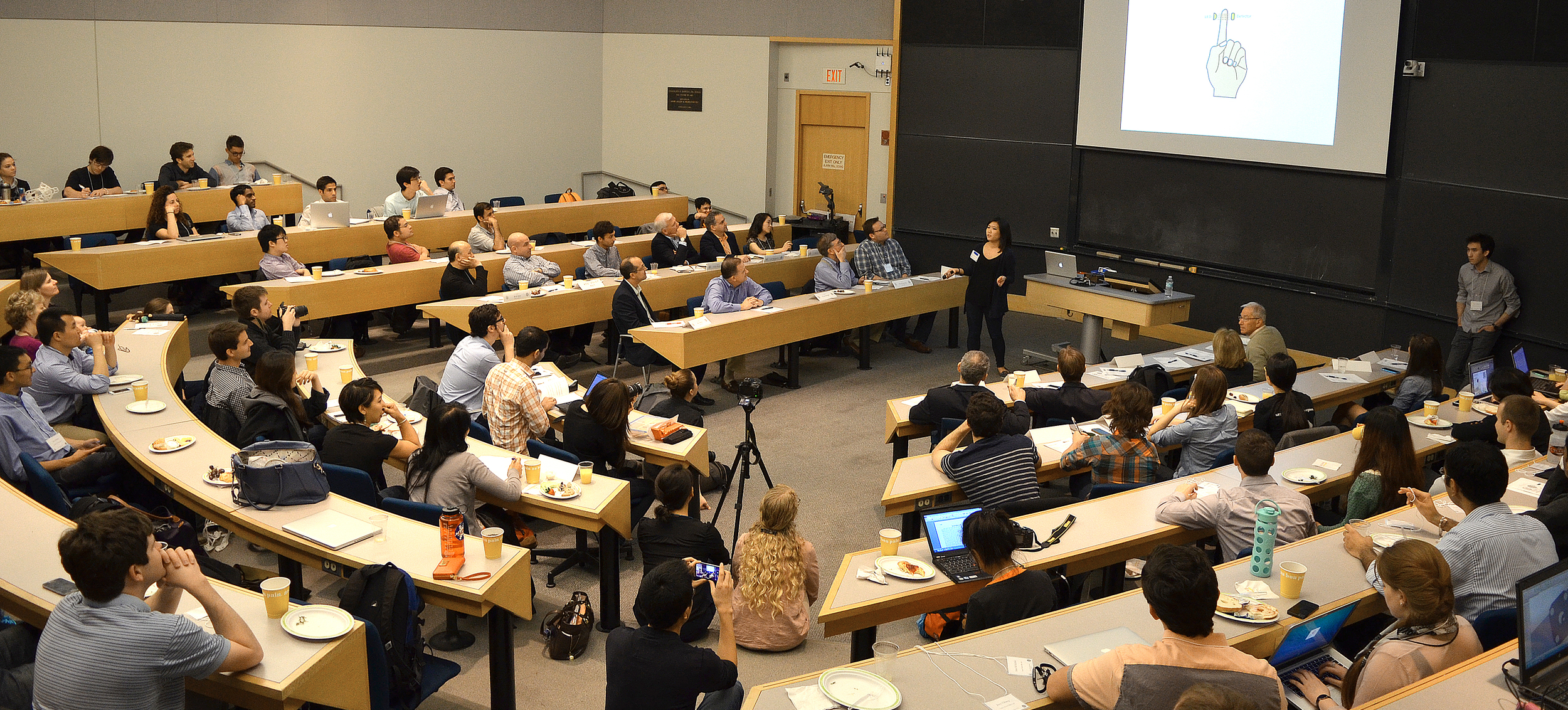
After a gruelling semester of ups and downs our MIT + RISD team has reached their final presentation, and what a presentation it was! The team’s final design addresses needs DtM had identified from overseas and new insights the student team uncovered during research with health care providers in Boston. Their concept embodies a variety of qualities that make it suited for the developing world context, some include:
- All in one design: eliminates unruly cords that can be easily damaged
- Compact, but not too small: small enough to carry around, but harder to accidentally lose
- Constant Alignment: hinged jaw design keeps sensors aligned, no room for user error
- Torsion Spring: pressure on baby’s foot is controlled by a spring, not the user
- Accommodates Many Foot Sizes: hinged design allows for quick adjustment
- Trigger: no need to fumble with band-aid style sensors, the trigger is simple and intuitive
- Only necessary features: only settings or readings that are needed
We are incredibly proud with all that the team has accomplished this past semester, and can't wait to test the concept in the field with a variety of our internal sacrificial concepts. Thank you Aditya, Esther, Keiichi, Kevin, Leah, Phillip, Shubhang, Victoria and Wei for all of your hard work! We look forward to working with you as we move Pelican forward!
Check out a video of their concept below!
- Will Harris, IDSA
DtM Designer
DtM Welcomes Steven P. Wentzell to Our Board of Advisors
Steve recently retired as the SVP of Human Resources for Dynamics Research Corporation (DRC), a $300M federal IT/Business Systems contractor in Andover, MA. For ten years, he was responsible for leading all aspects of DRC's human resources functions, talent acquisition, executive development and retention, internal communications and chair of the DRC Ethics Committee in support of the achieving the company's strategic business objectives. DRC was acquired by Engility Corporation in 2014.
Prior to joining DRC, Steve was a senior human resource executive within high-growth, leading- edge technology solutions organizations. As Senior Vice President for Human Resources at Brooks Automation, he was a key to the successful integration between Brooks and PRI Automation. Previous to that, he held several Human Resources leadership roles in the support of new business start-ups and high growth businesses within Digital Equipment Corporation. Steve is a graduate of the University of New Hampshire and Columbia University's Advanced Program in Organization Development and Human Resources Management.