
Design that Matters (DtM) designs medical devices for newborn health in low-resource hospitals. As a nonprofit, DtM focuses on settings where commercial manufacturers have no incentive to develop context-appropriate products: hospitals with unreliable electricity, limited staff training, high patient volumes, and no access to manufacturer service or spare parts.
DtM delivers devices that are hard to use wrong, where the best clinical outcome is also the easiest thing for the caregiver to do. We collaborate with international aid organizations and manufacturing partner MTTS in Vietnam to bring these devices to the hospitals that need them most.

Firefly Phototherapy
Firefly is a newborn phototherapy device designed to allow rural hospitals with limited resources and inexperienced staff to successfully treat otherwise healthy newborns for jaundice. Unlike the conventional overhead phototherapy devices hospitals might receive through international donations or a government purchase, Firefly provides high-intensity phototherapy that is “hard to use wrong”--in other words, the device eliminates the most common sources of product failure.
Otter Newborn Warmer
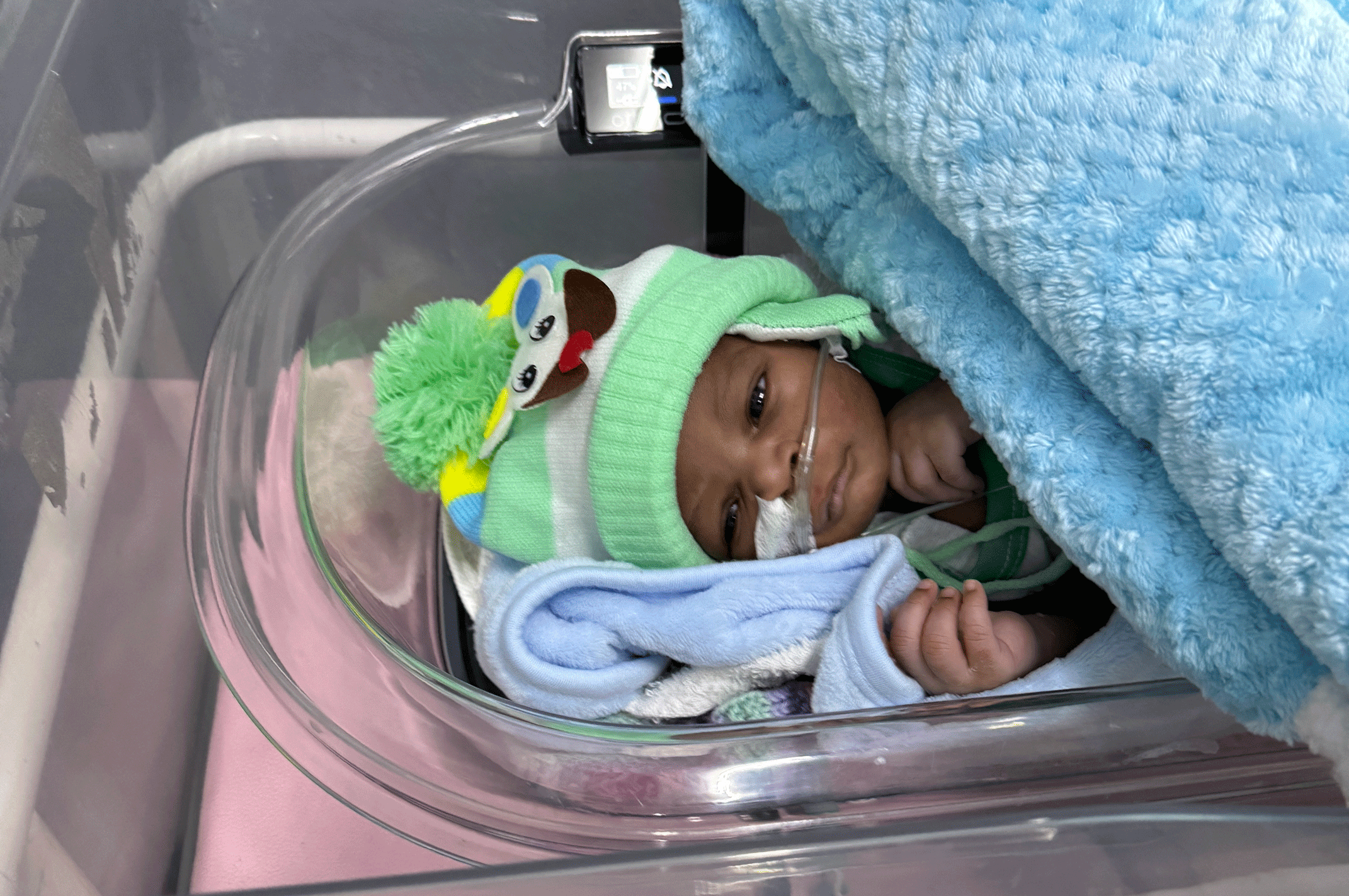
Otter is a newborn conductive warmer designed specifically to prevent and treat newborn hypothermia in low-income countries among admitted patients and during in-hospital transportation, for users with limited training in areas of electricity insecurity.
Otter features an intuitive touchscreen interface, seamless polycarbonate construction for infection control, and integrated battery providing uninterrupted warming during power failures.
Our Design Principles
Medical devices designed for and used in high-income countries are often unsuited for hospitals in low and middle income countries (LMIC). Such devices are designed to comply with international regulatory standards that assume ideal clinical conditions, including infrastructure, that are rarely found in the low-resource settings.
Regardless of regulatory approvals and assurances during user-training, clinical staff will reject a medical device that appears ineffective, or that gives the impression of being unreliable.
In medical device design, there is no such thing as a good excuse for failure. "User error" should be more properly interpreted as "design error". In order to achieve our desired clinical outcomes, we cannot rely on user-training to compensate for weaknesses in product design.
The best design will simplify or eliminate features that cause confusion or hesitation. The best design will inspire confidence in caregivers who might otherwise be intimidated by a complex and unfamiliar medical device.
The mismatch between international standards and the realities in low-resource settings can be significant. Around 30% of the medical equipment that the World Bank spent US$ 1.5 billion on between 1997 and 2001 was found to remain unused. DtM-designed medical devices must be suitable for the context and eliminate common medical device failure modes in low-resource settings.
Impact
As of January 2026, DtM’s Firefly newborn phototherapy device has reached 49 countries and treated more than 1.1M newborns, with recent new installations in Rwanda, Uzbekistan, Mali and Liberia. DtM’s Otter newborn has been implemented in Vietnam, Zambia and the Philippines, and has treated more than 800 newborns.
Worldwide, products that DtM has helped design and launch have treated more than 3.1M patients in 84 countries.
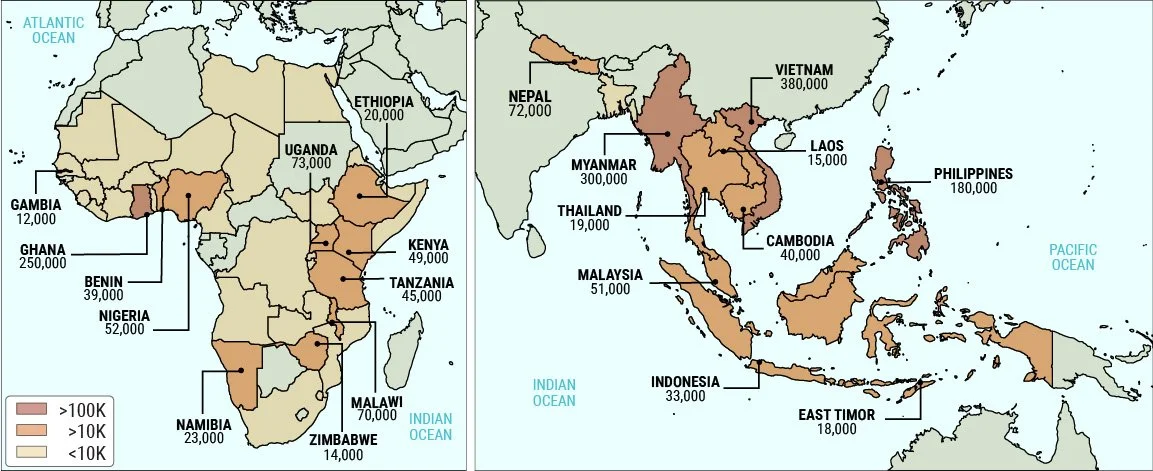
Total patients treated by DtM-designed devices in selected countries as of January 2026
Recognition






What’s Next
Otter received CE Mark approval in January 2026. DtM and manufacturing partner MTTS are focused on bringing Otter to the newborns who need it most. We are currently raising funds and recruiting partners to distribute the current production batch of 200 Otter units by Q3 2026, with a goal of treating 30,000 newborns.
DtM recently exhibited Otter at the International Maternal Newborn Health Conference in Nairobi in March 2026. We will return to Zambia in August for detailed field research evaluating Otter's effectiveness in real-world conditions.
DtM is in the early stage of developing two new medical devices: a next-generation phototherapy device for the most resource-constrained settings in rural Africa that will complement the Otter Newborn Warmer, and an oxygen concentrator designed to address the chronic shortage of medical oxygen in low-resource hospitals.